Understanding the Contractor Referral Process in Detail
When an electrical emergency strikes or when planning a major property renovation, homeowners and business managers often face an overwhelming volume of conflicting advertising, unclear credentials, and uncertain contractor availability. WATT911 eliminates this friction by providing a structured, transparent mechanism to access independent electrical specialists across New York State.
Our process is intentionally straightforward and built upon mutual respect between property owners and professional tradespeople. We do not require complex app downloads, forced membership subscriptions, or hidden booking fees. By dialing our centralized referral routing line or exploring our regional service directories, you connect directly with independent trade companies equipped to evaluate your project.
What to Prepare Before Contacting an Electrician
To ensure the most productive consultation and accurate preliminary estimate, property owners are encouraged to gather pertinent information prior to speaking with an independent contractor:
- Describe the symptoms accurately: If you are experiencing an electrical failure, note whether circuit breakers trip immediately upon reset, if lights flicker when specific appliances cycle on, or if you detect any burning odors or buzzing noises.
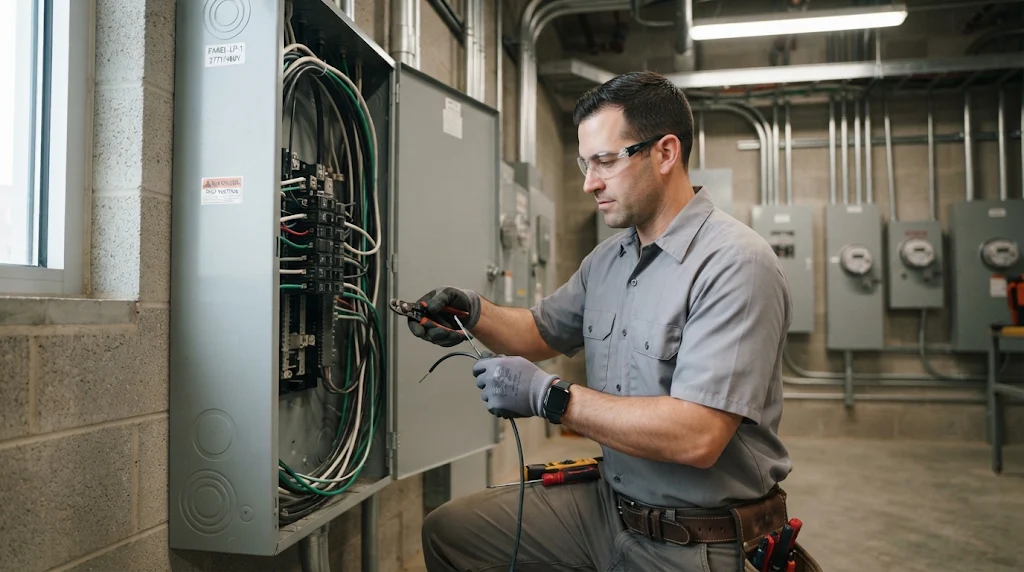
- Identify your electrical panel details: Know where your main electrical service panel is located and check the main breaker rating (commonly 60A, 100A, 150A, or 200A) and the manufacturer brand (such as Square D, Siemens, Cutler-Hammer, GE, or older brands).
- Define your upcoming electrical additions: If you are planning an upgrade—such as installing an electric vehicle charger, a whole-home standby generator, or an all-electric heat pump—gather the electrical specification plates or wattage ratings of the intended equipment.
- Determine your property's age: Structures built before 1970 frequently contain ungrounded two-prong circuits, older cloth-sheathed wiring, or legacy fuse panels that may impact the scope and cost of new installations.
Ready to Discuss Your Electrical Needs?
Call our New York referral desk today to connect with an independent electrical professional serving your local area.
How Independent Contractors Evaluate Your Project
Once connected, an independent electrical contractor will typically conduct a comprehensive on-site diagnostic assessment. For complex projects—such as main service panel replacements or whole-home rewiring—an in-person evaluation is indispensable. During this consultation, the contractor will calculate the electrical load requirements according to National Electrical Code (NEC Article 220) formulas, inspect the condition of the service entrance cable and utility meter pan, examine grounding electrode conductors and ground rods, and verify branch circuit integrity.
Following this evaluation, the contractor will present you with a written scope of work detailing equipment specifications, permit filing requirements with your local building department, estimated completion timeframes, and total project costs. You retain complete autonomy to accept the estimate, request modifications, or seek secondary consultations.
Permits, Inspections, and Project Completion
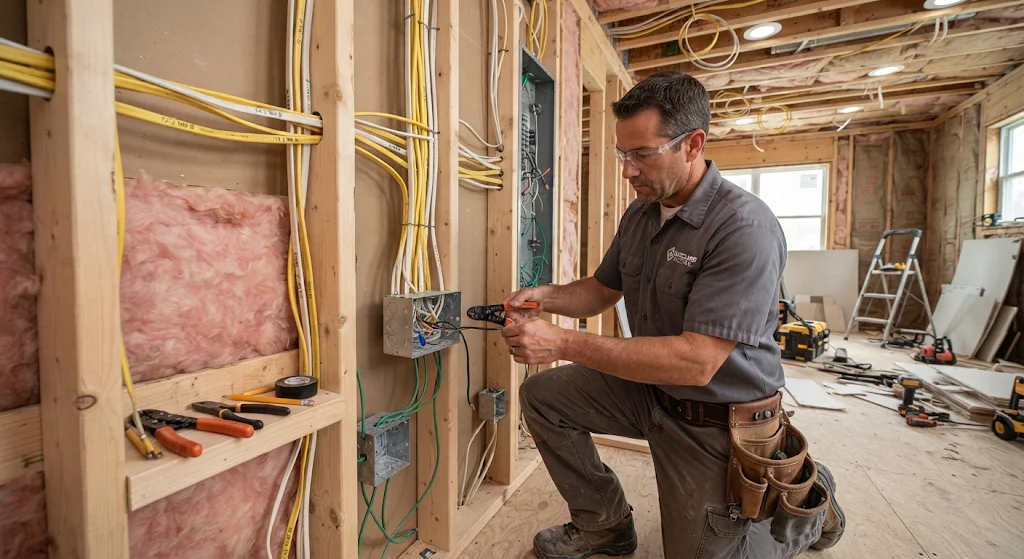
In virtually all New York municipalities, significant electrical alterations require an official building permit issued by the municipal building department. A reputable independent electrical contractor will handle the preparation, filing, and submission of the permit application on your behalf.
Upon completing the rough-in and final trim phases of the electrical installation, the work must be inspected by an authorized third-party electrical inspection agency recognized by your local municipality. Upon passing inspection, the agency issues a formal Certificate of Electrical Inspection, allowing the municipal building inspector to sign off on the project and issue a Certificate of Compliance. Retaining these official documents is vital for maintaining homeowner insurance validity and facilitating smooth future real estate transactions.